
Mounting options
Roof, Ground, and Top-of-pole
There are several ways to install a PV array at a
residence. Most PV systems produce 5-to-10 Watts per square foot of array
area. This is based on a variety of different technologies and the varying
efficiency of different PV products. A typical 2-kW PV system will need
200-400 square feet of unobstructed area to site the system.
Consideration should also be given for access to the system. This access
space can add up to 20% of needed area to the mounting area required.
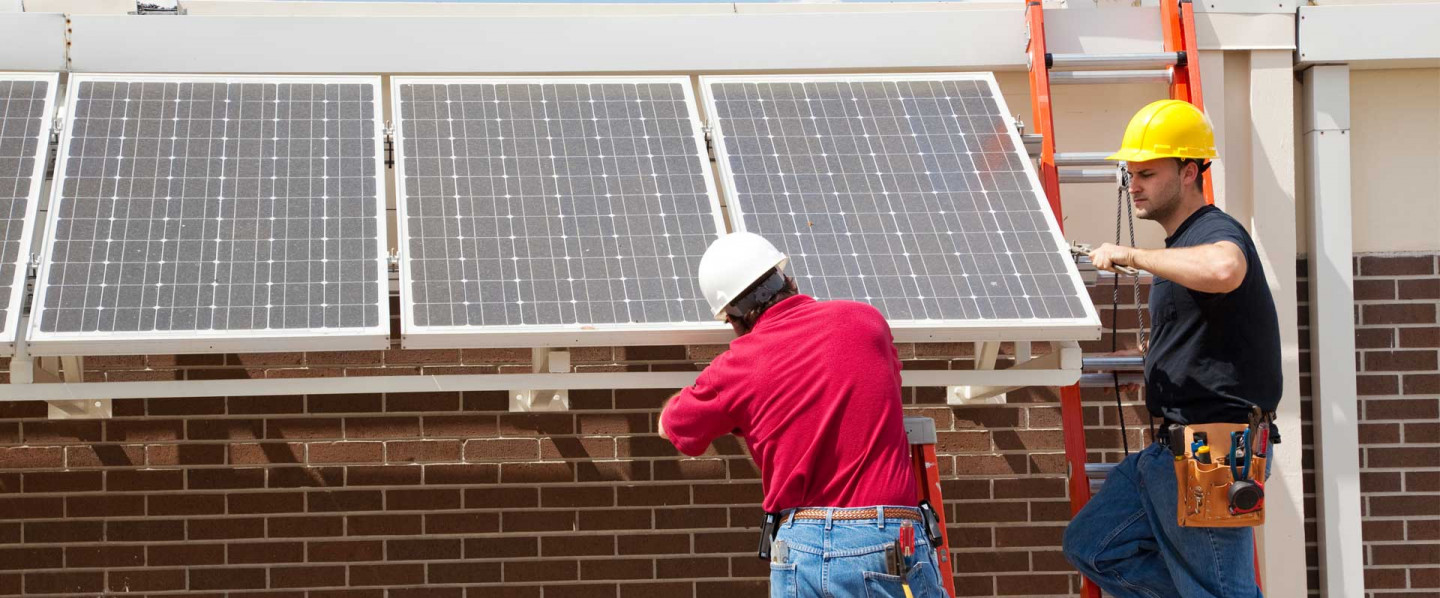
Roof mount
Typically the easiest way to
keep the wire run distances between the solar array and battery bank to a
minimum, which is good. But they also require roof penetrations in multiple
locations (a potential source of leakage) and they require an expensive
ground fault protection (GFP- device to satisfy article 690-5 of the
National Electrical Code- NEC).
Proper roof mounting can be labor intensive. Particular attention must be
paid to the roof structure and the weather sealing of roof penetrations. It
is typical to have one support bracket for every 100 Watts of PV modules.
For new construction, support brackets are usually mounted after the roof
decking is applied and before the roofing materials is installed.
The crew in charge of laying out the array mounting system normally installs
the brackets. The roofing contractor can then flash around the brackets as
they install the roof. A simple installation detail and a sample of the
support bracket is often all that is needed for a roofing contractor to
estimate the flashing cost.
Masonry roofs are often structurally designed near the limit of their
weight-bearing capacity. In this case, the roof structure must either be
enhanced to handle the additional weight of the PV system or the masonry
roof transitioned to composition shingles in the area where the PV array is
to be mounted. By transitioning to a lighter roofing product, there is no
need to reinforce the roof structure since the combined weight of composite
shingles and PV array is usually less than the displaced masonry product.
Ground mount
These solar arrays require fairly precise foundation setup, and are more
susceptible to theft/vandalism and excessive snow accumulation at the bottom
of the array.
Top-of-pole
A relatively easy way to install panels (you sink a 2 to 10 inch diameter
SCH40 steel pole up to 4 to 6 feet in the ground with concrete). Make sure that
the pole is plumb and mount the solar modules and rack on top of the pole.
Top-of-pole mounts reduce the risk of theft/vandalism (as compared to a
ground mount). They are also a better choice for cold climates because snow
slides off easily.
Side of pole mounts are easy to install, but are typically used for small
numbers of solar modules (1 to 4) for remote lighting systems where there
already is an existing pole to attach them to.